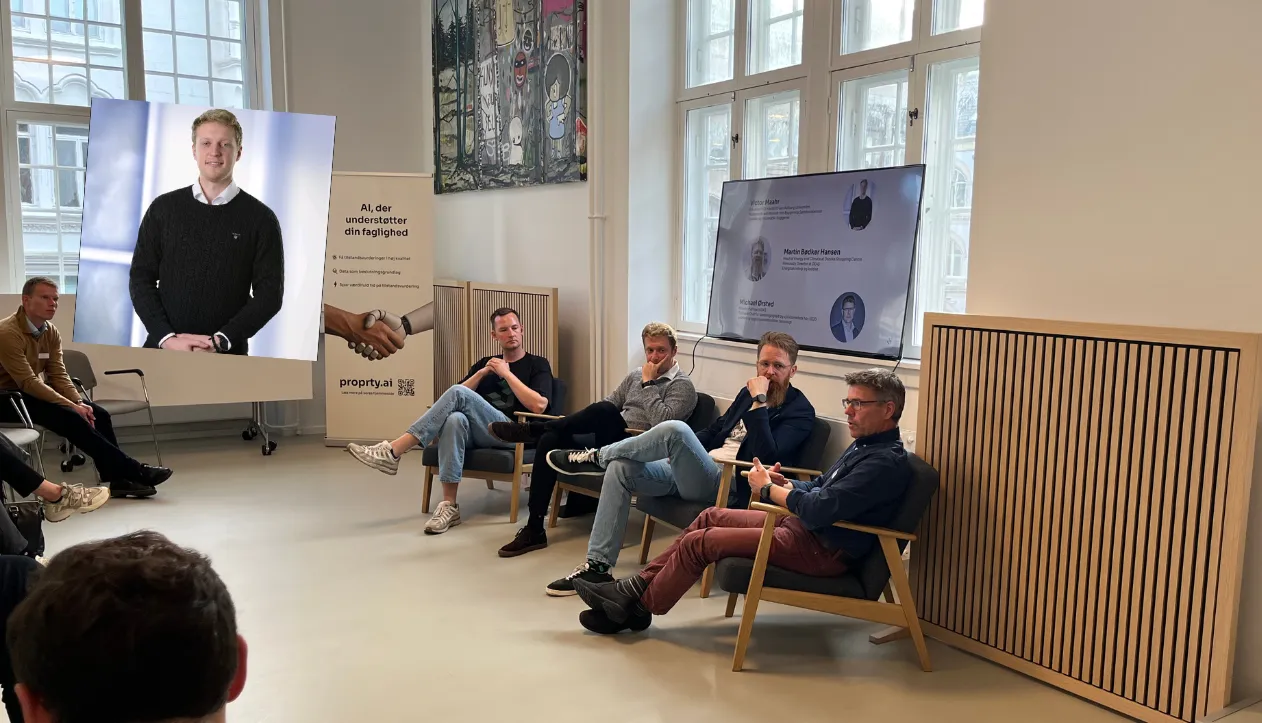
In the green transformation of the building mass, we talk a lot about energy renovations and new materials. But some of the biggest CO₂ gains are actually found in the unspectacular: ongoing, preventative maintenance.
This was emphasized by Victor Maahr from the City of Copenhagen during proprty.ai's CO₂ breakfast earlier this autumn, where experts and practitioners shared experiences on how data can be used to reduce the climate footprint of buildings.
“We are trying to renovate our way out of the climate crisis, but there are low-hanging fruits in maintenance that many overlook. When we extend the life of building parts, we avoid new production of materials and thus large CO₂ emissions,” explained Victor Maahr during the event.
Maintenance as a climate tool
The construction sector accounts for about 30% of Denmark's total CO₂ emissions, and an increasing share comes from embedded CO₂ — the energy and emissions already used to produce building materials.
When we renovate, it requires new materials, new transport and new processes, all with a significant climate footprint.
Research shows that extending the life of a building can reduce the total embedded energy by up to 29%, simply because the CO₂ cost is spread over several years (Rauf & Crawford, Vida del servicio de construcción y sus funciones en la ciclo de vida embodado de construidos, Energie en bouwen, 2014).
According to Victor Maahr, preventive maintenance should be seen as an active climate tool. When roofs, facades or installations are continuously inspected and maintained, the value of the existing is preserved and the need for major replacements is postponed for decades. At the same time, by avoiding the degradation of building parts but preserving their value, the possibilities for discretionary dismantling and reuse are increased.
A report from Ramboll shows that preserving and maintaining existing windows is often better in climate terms than replacing them, even when new windows can provide energy benefits (Energiforum Danmark, 2024).
The low-hanging fruits in practice
Preventive maintenance is not about large investments, but about systematics and timely care. As Victor Maahr pointed out, many of the low-hanging fruits are found in daily work:
Detect damage in time. A single leaky roof or a crack in the facade can cause major collateral damage and thus a large CO₂ footprint when it all needs to be rebuilt.
Protect from degradation. With surface treatments and minor repairs, the service life of concrete, wood and steel can be significantly extended.
Think lifecycle rather than projects. When maintenance is planned as a continuous process instead of one point every ten years, function and aesthetics are preserved far longer.
Make better use of resources. By optimising operation and inspection, the need for replacement and thus also CO₂ from production, transport and disposal is reduced.
Data can lift the stakes
More builders today are working with data-supported maintenance, where AI-based models predict lifespan and optimize effort. According to Victor Maahr, that kind of insight can help set in before degradation starts and document the climate gains of a more planned operation.
When we take care of what we already have
Preventive maintenance is one of the most overlooked but most effective ways to reduce CO₂ emissions. It does not require new methods, but a changed mindset from repair to conservation.Today, the climate requirements of LCA calculations apply only to new construction, but renovations are expected to be included in the future. Although the LCA standard already includes maintenance, the maintenance phase is not yet part of the legal requirement. According to Victor Maahr, this will be an important step when extending the life of good maintenance plans in the future can be included in the calculation of the total climate load of buildings.
When we take care of what we already have, we not only extend the life of the building, we also give the climate a necessary break, emphasized Victor Maahr during the CO₂ breakfast.


Subscribe to our newsletter
Get insights into new features, customer cases, and news from proprty.ai, delivered straight to your inbox.