By & Havn assessed 500,000 m² in six weeks and reduced its operating budget by 5% in the first year. That requires a different way of working. Here are three learnings from a panel on how.
How do you move from reactive to data-driven maintenance in practice? Three experienced practitioners shared what has actually changed in their work.
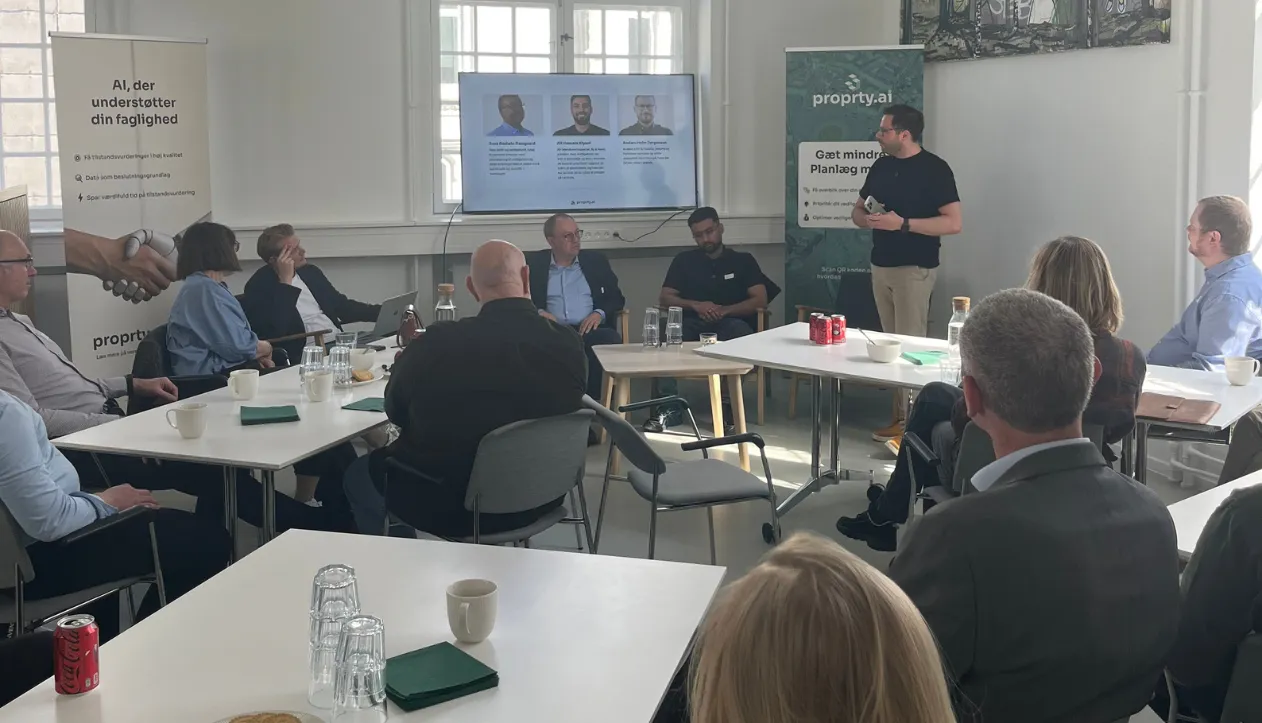
On 22 April, we gathered an operational meetup at proprty.ai in Copenhagen. The panel featured Ali Hasnain Kiyani, Property Inspector at By & Havn, Jens Godwin Damgaard, head of property at Ishøj Municipality, and Anders Holm Jørgensen, CEO and co-founder of proprty.ai. The conversation was moderated by Rasmus Sørensen.
The focus was on the practical. Not value propositions or potential, but how you actually do it: how to get started with condition assessments, how to move from a maintenance plan in the drawer to a management tool in daily use, and what it takes to make the case for preventive maintenance in a municipal budget.
Here are three of the most important learnings from the conversation.
"Worn on purpose" is a real strategy in the industry
Jens Godwin Damgaard from Ishøj Municipality described an approach he often encounters:
"In nature management, you know the phrase 'wild on purpose'. In property, I heard that some people run a strategy called 'worn on purpose'. And I think that's true, some people actually run that strategy."
The point isn't to name anyone, but to put words to a pattern: when the overview is missing, deferral becomes the default strategy. The money is only found when the roof is leaking. It's an expensive way to run a building portfolio, because the bill never disappears, it just grows.
Anders Holm Jørgensen added context:
"It's an easy decision when it's raining in and everyone is wet. It's much harder to make decisions about actions where the need isn't visible to the eye. It can also be difficult to understand why it's financially advantageous to act."
The way out isn't just about data. It's about being able to turn data into a dialogue with the people who control the budget. Without that tool, preventive maintenance always loses the budget debate.
The difference between having a plan and using it as a management tool
Most organisations have a maintenance plan. But what happens to it after it's delivered?
Ali Hasnain Kiyani described how it looked at By & Havn before:
"We had external firms, they came and made a maintenance plan. And then it was just filed away."
After they moved to a data-driven approach, that changed:
"Now I go through the buildings myself, write the maintenance tasks in, and through the Dalux integration they automatically become tasks. That meant it became visible and it got done. Budget-wise, we also got a much better overview. I know two years ahead which tasks I need to do, and I can see whether the budget is in place."
Anders added an observation from working with many different organisations:
"It's actually complex to turn the information in a condition report or a maintenance plan in Excel into something that can actually be decided on and executed. It sounds trivial, but it's difficult to translate recommendations into decisions into tasks that get done."
The difference between a plan and a management tool is the decision you can make from it. When the plan lives in the same system as the tasks, it moves from documentation to operations.
Reversing the process: budget first, then inspection
The most provocative learning came from By & Havn's approach, which Anders explained:
"Normally, you go out and see what needs to be done, and then you stack it up, and that's your budget. By & Havn did the opposite. They let the AI model tell them what their capex budget for maintenance should be, and then they used that as the starting point. The model doesn't say you need to fix this specific settlement crack. It says preventive maintenance needs to be done on this facade. Then you go out and qualify it."
The result speaks for itself. Ali, a newly qualified building technician with no experience in condition assessments, got through 500,000 m² in six weeks. By the end of the first full year, By & Havn had reduced its operating budget by 5% by becoming more preventive.
Jens from Ishøj Municipality described what the same principle did for them:
"Before, you'd have a budget of 100,000 DKK for windows, so you'd replace two in one nursery and two in one school, and the money was spent. Now we put it into system. I've also been given overall responsibility for interior maintenance in nurseries. That means in three years I've replaced all the floors in every nursery in Ishøj. The normal price would be 500 DKK per square metre. I can do it for 350, because I pool it and bundle it."
That's the difference between spending a budget and prioritising a budget. When data and overview come first, it becomes possible to pool, plan and push the price.
Summary
- Without an overview, "worn on purpose" often becomes the default strategy. The bill doesn't disappear, it just grows.
- A maintenance plan needs to be a management tool, not a document in a drawer. That requires that the plan can be moved, updated and executed from the same place.
- By letting data define what the budget should be spent on, and qualifying it in the field, By & Havn got through 500,000 m² in six weeks and reduced its operating budget by 5% in the first year.
- The case for preventive maintenance isn't won with a condition report. It's won with a tool that makes it easy to make decisions and document the consequences.
Thank you
Thank you to Ali, Jens, Anders and Rasmus, and to everyone who came by. We're running more operational meetups throughout the year. Follow proprty.ai on LinkedIn for the next invitation.


Subscribe to our newsletter
Get insights into new features, customer cases, and news from proprty.ai, delivered straight to your inbox.