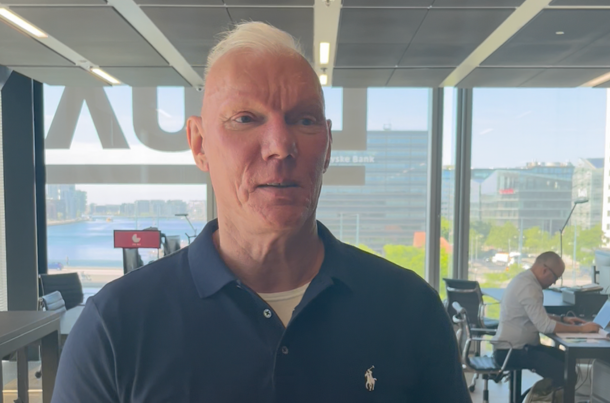
From spreadsheets to AI-driven maintenance at Rudersdal Municipality
Copenhagen, 29 June 2026. Rudersdal Municipality manages 540 buildings, from schools and daycare centres to administrative properties. In late 2025, the municipality replaced its spreadsheet-based maintenance planning with proprty.ai. On day one, all 540 buildings were in the system. Within a month, the team was making maintenance decisions based on AI.
For Bryan Morillo Karlqvist, Project Manager for Properties at Rudersdal Municipality, the move was about getting a tool that could keep up with the way they needed to work.
“We started looking for a tool like proprty.ai because we saw a big need for something that could help us understand the condition of our buildings,” says Bryan Morillo Karlqvist. “Instead of looking at the things we needed to fix in an Excel sheet, we needed a tool that keeps that data alive, not in every detail, but at a more strategic and tactical level.”
540 buildings, live on day one
Rudersdal expected the usual onboarding pattern: months of data preparation before the system could say anything useful. That is not what happened. Two weeks after signing, onboarding was running. Within a month, the entire portfolio was live and the team was working in the tool.
“What surprised us most was that on day one we had our entire portfolio in the system,” says Bryan Morillo Karlqvist. “The mapping of our properties was one-to-one, so it was really easy. But the fact that they could say something about the condition of 540 buildings with a certainty score of 60%, that was really, really amazing.”
The 60% figure Bryan describes is proprty.ai’s confidence score: for every prediction, the probability that the condition estimate is correct. A 60% score across the full portfolio gave Rudersdal a defensible starting point on every building from day one, with no manual inspections of 540 properties first.
AI beat the spreadsheet immediately
The harder test came once the data was in. Could the AI actually call the right priorities better than the team could on their own?
“Right away we had the entire portfolio in the system, and we could make decisions based on AI alone that were far better than the ones we had been making from spreadsheets,” says Bryan Morillo Karlqvist.
The confidence score is part of why the AI-based plan holds up better than a spreadsheet, not worse. Every prediction comes with a clear measure of how sure the model is.
“That is something a spreadsheet cannot give you, unless you add a new column and update it by hand,” says Bryan Morillo Karlqvist.
Public money, prioritised and documented
For a municipality, where the money goes is only half the question. Why it went there has to hold up to scrutiny later. proprty.ai gives Rudersdal a prioritisation it can explain and defend later, and the case landed quickly with the municipality’s leadership.
“We presented this to our management, and our finance director was very enthusiastic,” says Bryan Morillo Karlqvist. “He could see the potential in moving towards preventive maintenance and planning ahead, so we do not have to come back and ask for more money as often.”
For Bryan, the principle behind the work is straightforward.
“It is about spending the money we have been given in the best possible way,” says Bryan Morillo Karlqvist. “Only when we do that, and have our own house in order, can we go to the politicians and point to where money is genuinely missing. We need a method, a standard and a tool that helps us document the case we are making.”
From firefighting to preventive maintenance
The strategic shift Rudersdal is making is from reactive repairs, where buildings get attention only after something breaks, to planned preventive maintenance. Bryan compares it to owning a summer house: the value comes from steady upkeep, not from repairs after the damage is done.
“The paradox is that preventive maintenance is where we get the most out of our maintenance budget,” says Bryan Morillo Karlqvist. “Painting the windows, painting the woodwork, that is where the return is highest. And from a sustainability perspective, it is where we get the maximum lifetime out of our building components. That is the path we want to take, and where we want proprty.ai to support us.”
The goal for 2026 is to lift the confidence score from 60% to 80–85%, as the team’s own registrations sharpen the data. The direction is set: less firefighting, more planning, and a clearer case every time the municipality asks for money.
proprty.ai uses domain-specific AI to predict building condition, remaining lifetimes and cost across large building portfolios, creating a continuously updated decision foundation that helps property owners time capex correctly, reduce unplanned opex and build a defensible basis for maintenance investments. Today proprty.ai works with municipalities, social housing organisations and institutional investors across Denmark, Norway, Switzerland and Germany.


Subscribe to our newsletter
Get insights into new features, customer cases, and news from proprty.ai, delivered straight to your inbox.