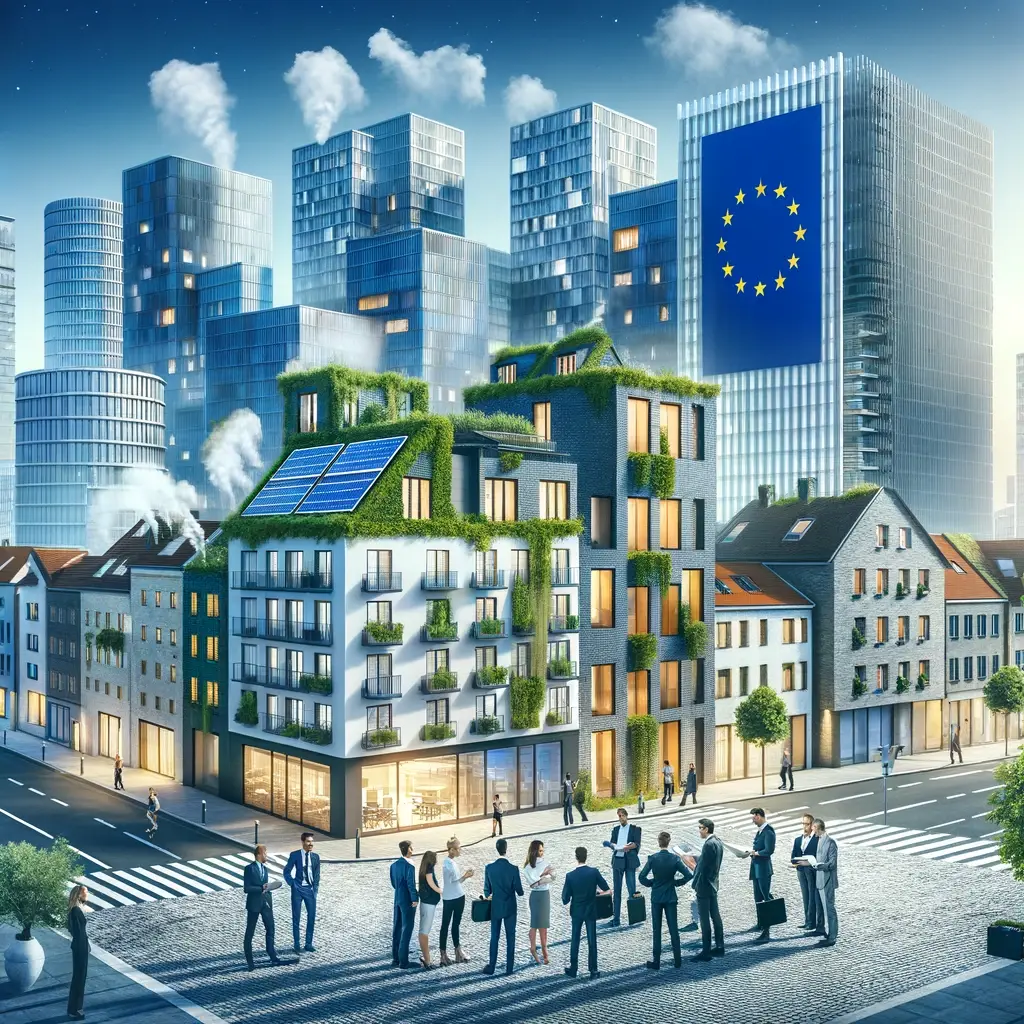
Positive Impact on Existing Building Mass
The revised version of the EPBD aims to double the renovation rate of buildings annually by 2030 and promotes in-depth renovations. Member States will adopt their own national road to reduce average primary energy consumption in residential buildings by 16% by 2030 and 20-22% by 2035. There is sufficient flexibility to take into account national circumstances and Member States are free to choose which buildings they will target and what action they will take.
Challenges of National Implementation
National measures must ensure that at least 55% of the reduction in average primary energy consumption is achieved through renovation of the worst-performing buildings. For non-residential buildings, the revised rules call for gradual improvement via minimum energy efficiency standards. This will lead to refurbishment of the 16% worst-performing buildings by 2030 and the 26% worst-performing buildings by 2033. Member States will have the possibility to exempt certain categories of residential and non-residential buildings from these obligations, including historic buildings or holiday homes.
Enhanced Energy Performance Certificates (EPCs)
Enhanced EPCs will be based on a common EU template with common criteria to better inform citizens and facilitate funding decisions across the EU.
Conclusion:
The EU EPBD represents an ambitious path towards a more sustainable and energy-efficient future for the EU's building stock. It is an important step towards climate neutrality and will have a significant impact on energy savings and greenhouse gas reduction. However, the real effectiveness and success of these policies depends largely on the ability and willingness of individual Member States to implement them effectively and in a timely manner. Cooperation and coordination across the EU will be key to ensuring that these ambitious goals become a reality.
Link to the EU Commission: https://ec.europa.eu/commission/presscorner/detail/en/ip_23_6423


Subscribe to our newsletter
Get insights into new features, customer cases, and news from proprty.ai, delivered straight to your inbox.