It is tempting to use Google Maps and Street View to automatically assess the condition of exterior buildings, using multimodal language models. But despite the fact that Google can provide an overview, it is far from a reliable method for assessing the condition of building parts.
In this blog post, I delve into why we choose not to give a quote on the condition, residual life and maintenance costs of building parts, based on images in Google Maps.
The image resolution is not always sufficient
The quality of the images that come from Google Street View varies widely. It largely depends on how close to the building the picture is taken. Is the window getting worn out or does it need painting? Maybe it even works as it should?
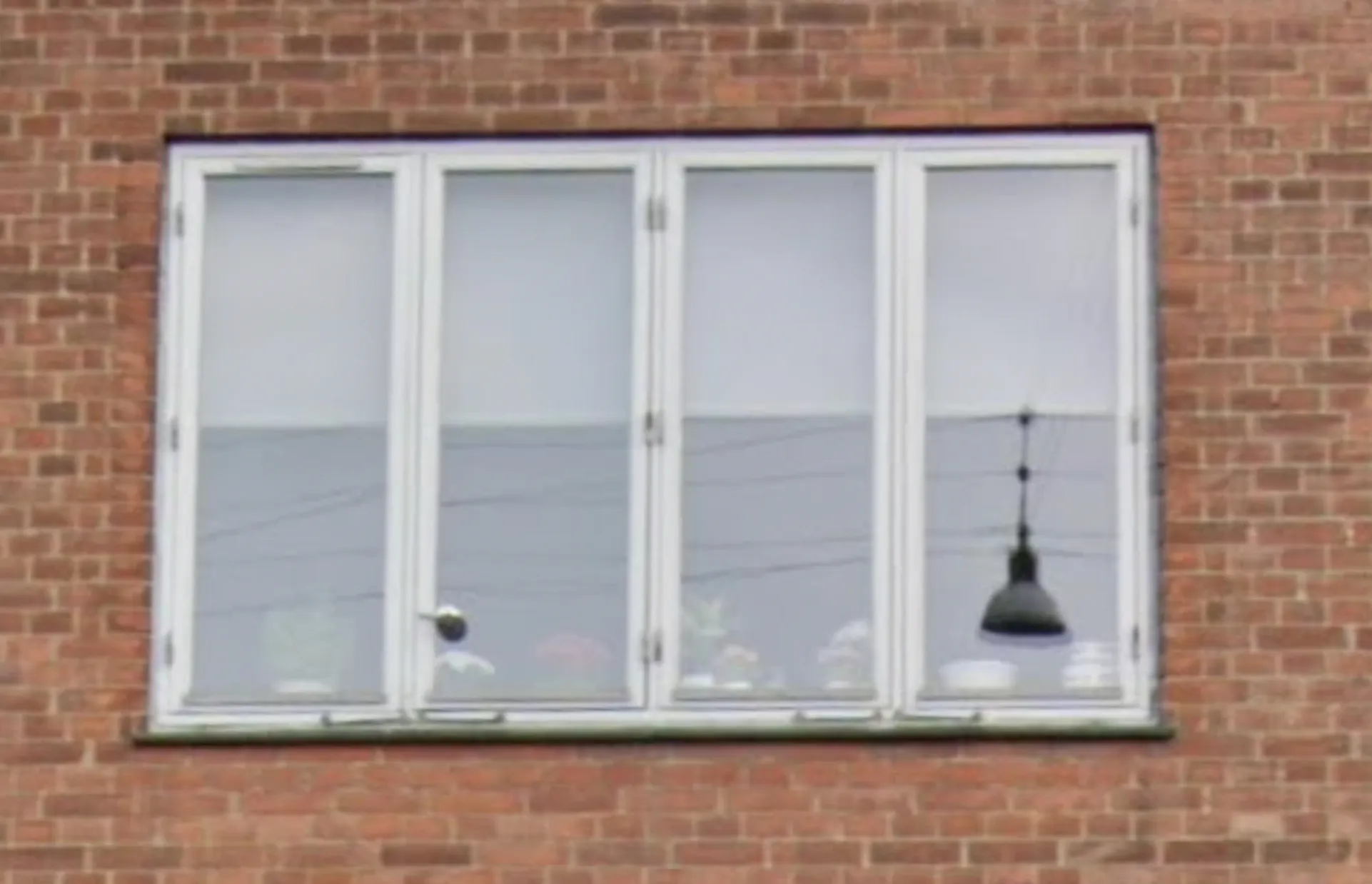
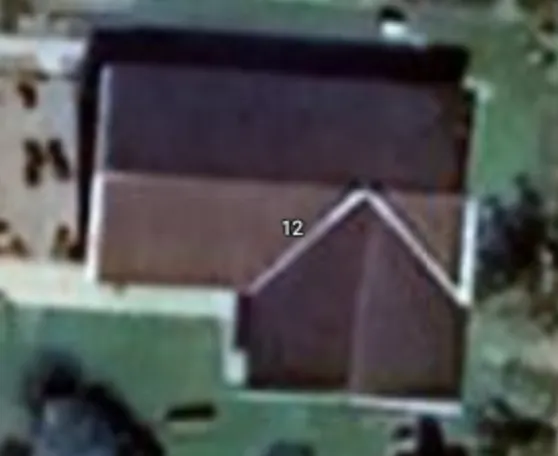
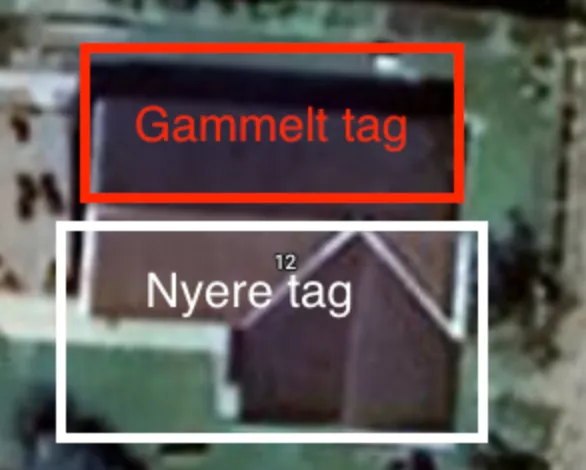
In addition to the image quality of the images below being too poor to be able to say anything about the condition of the roof, it can also be difficult to tell if a roof side is in the shade or if parts of the roof have been installed at different times.
Here it might look like the roof is installed at the same time, but in reality parts of the roof have been changed in connection with an extension.
The whole roof in the picture here is relatively new, but still looks very different because of how the light falls.
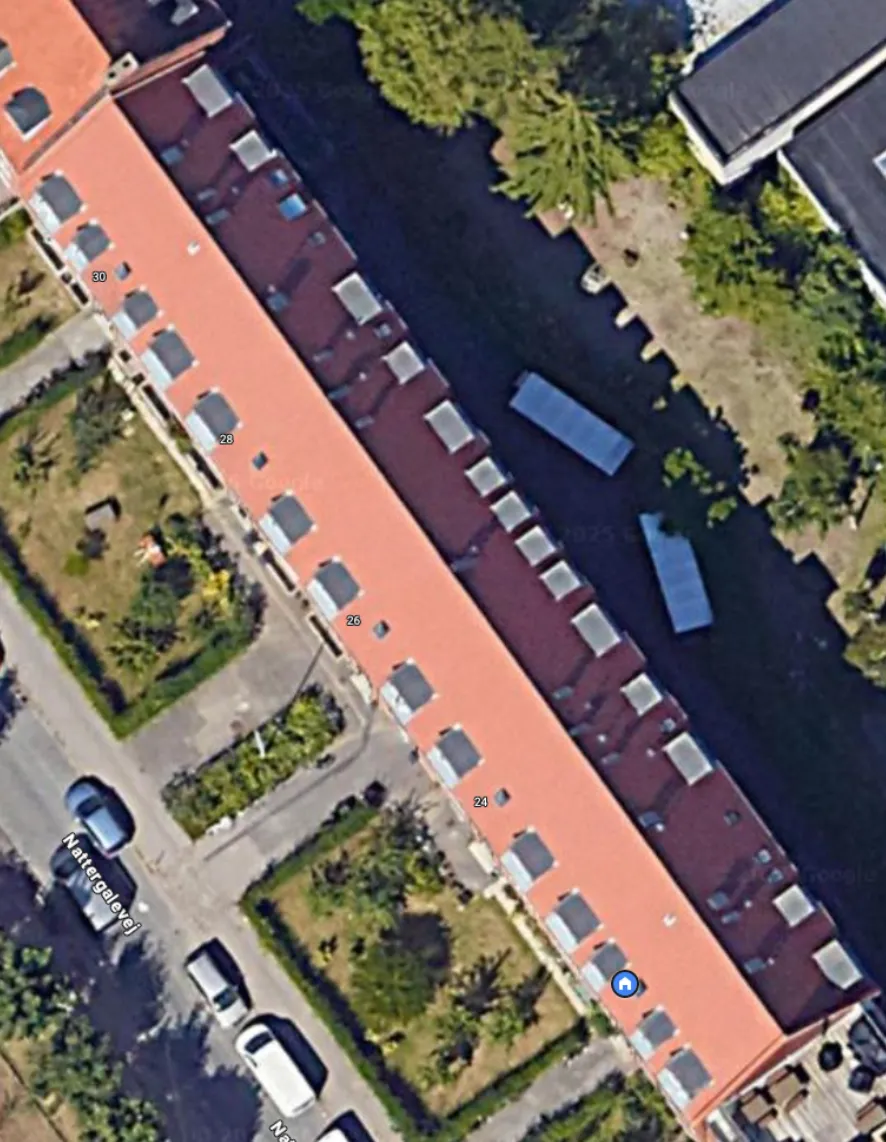
Thus, it can be very difficult to make a reliable assessment of the condition of roofs, windows, or other exterior building parts if it is based solely on images from Google.
The viewing angle of the building may be limited
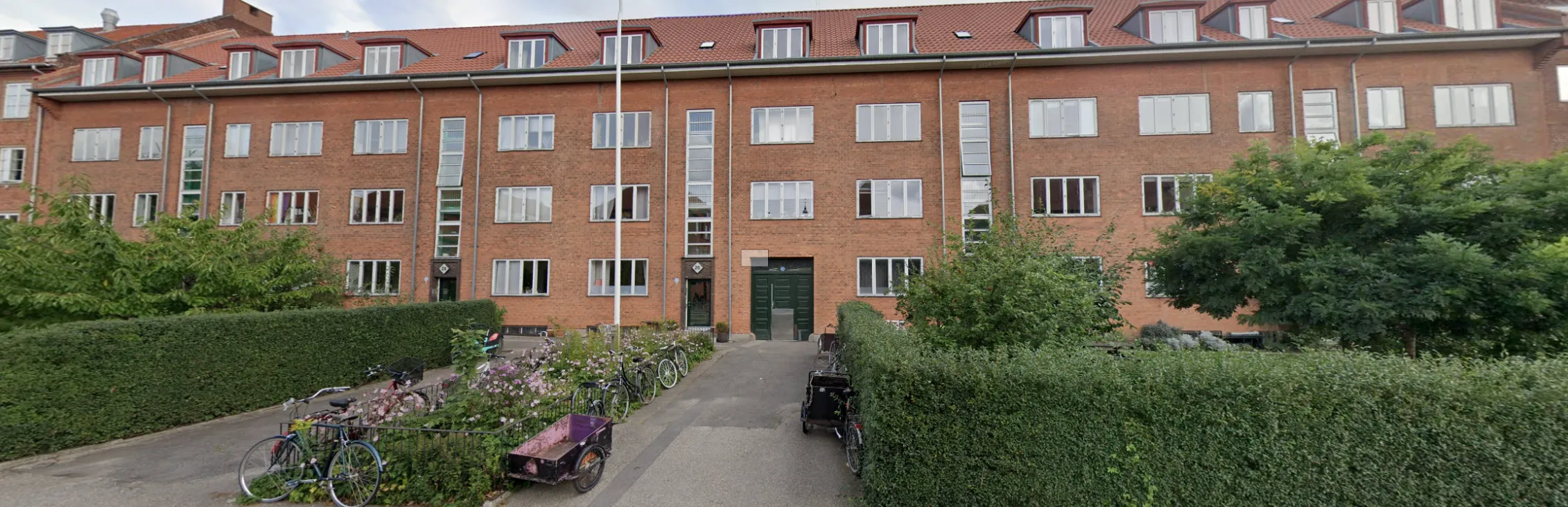
Another problem you may encounter is that the building cannot be seen properly. For many buildings, images will only be available from one or two sides, and a condition assessment will therefore have to assume that the building looks the same all around. The picture below is from the building I live in. It looks significantly different on the other side as balconies are installed at the back.
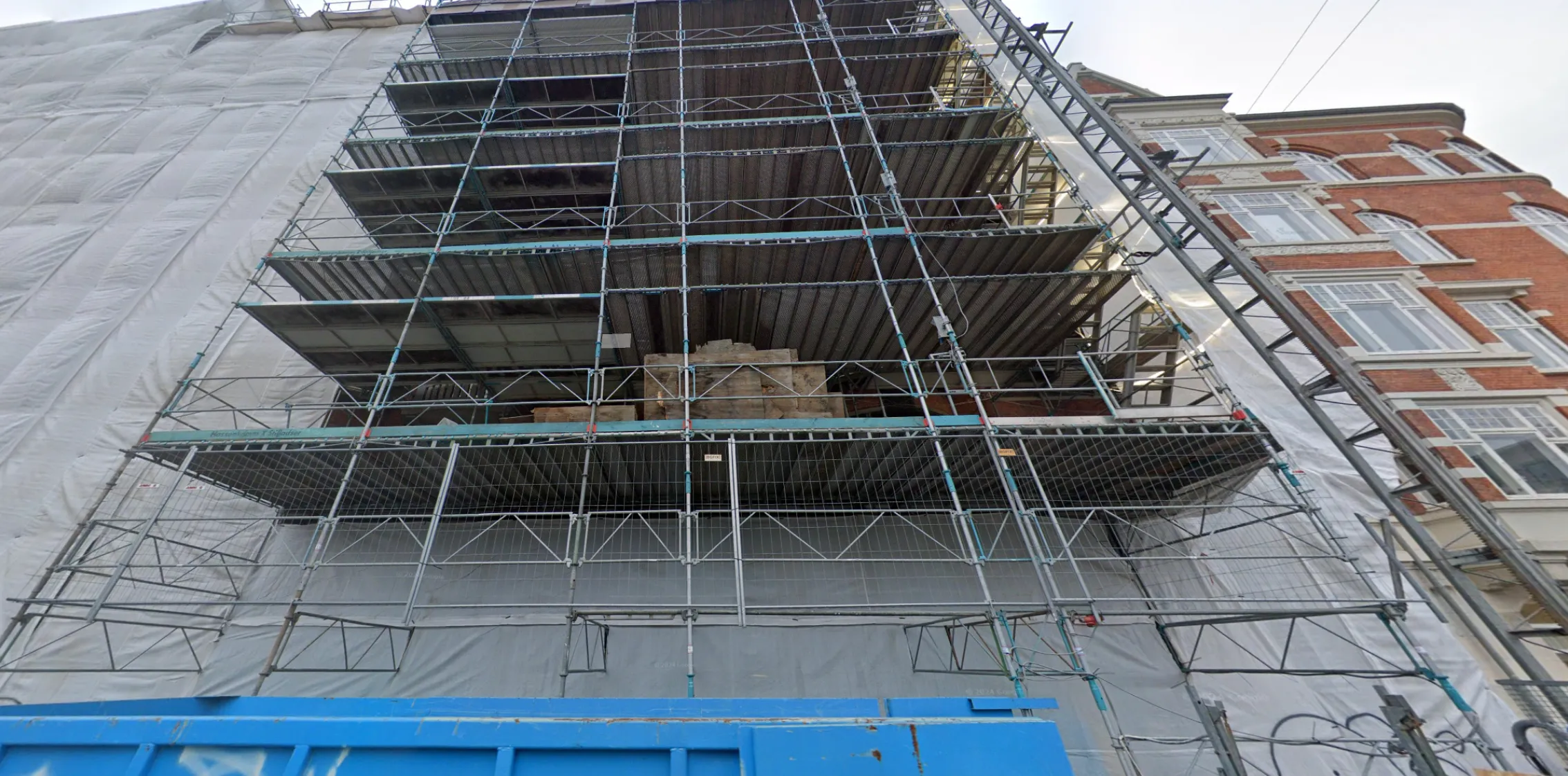
Part of the overall building stock will also be hidden behind trees in the garden, scaffolding, or other temporary installations, such as advertising banners. This makes it impossible to assess the condition of the external components of such buildings.
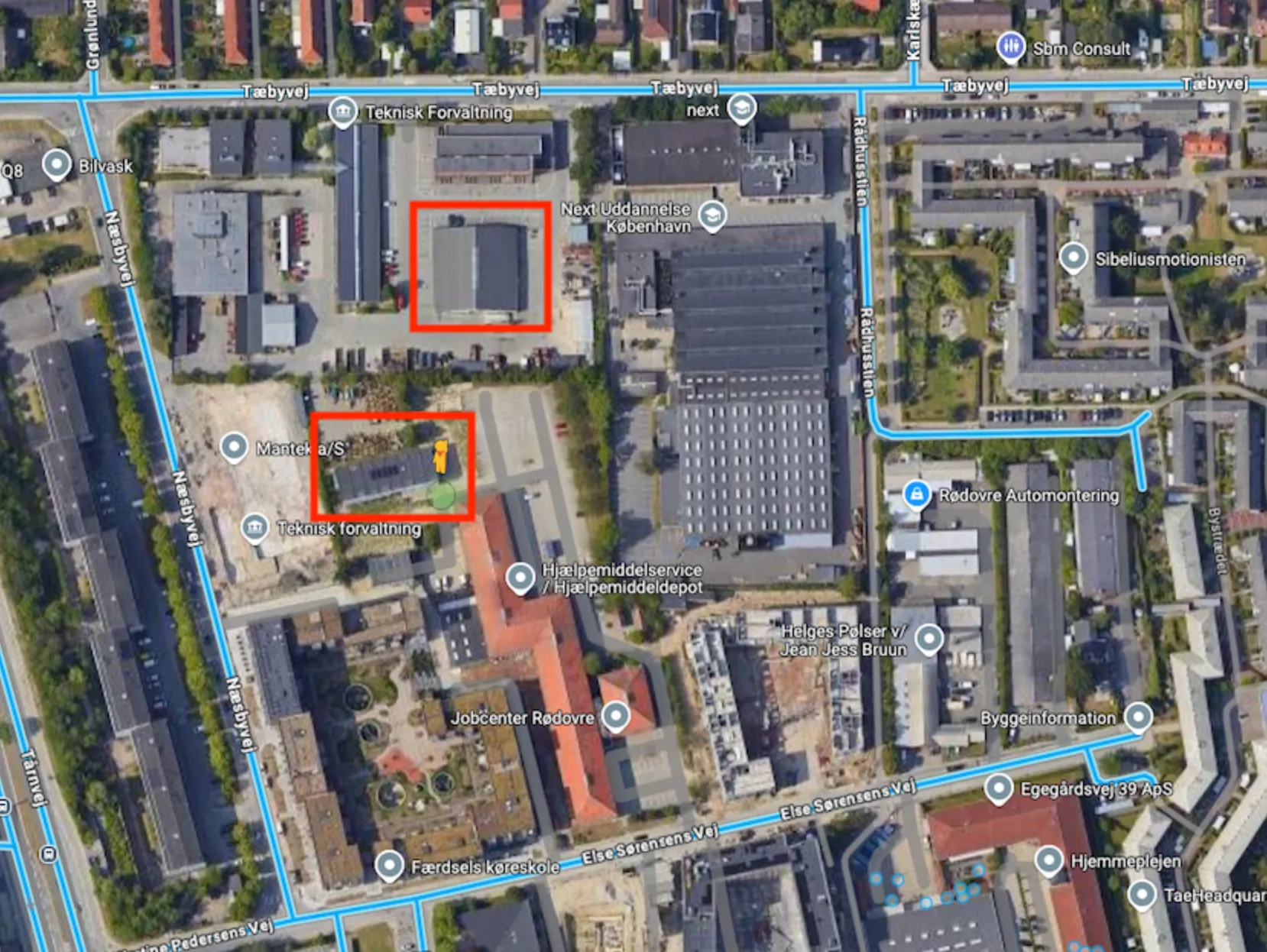
Last but not least, there are buildings for which there is no Street View at all. The possibilities for carrying out condition assessments on these buildings are therefore very limited. The buildings in the red squares pictured below are examples of this.
We strive to create solutions that work for all buildings
The arguments in the above sections have all been involved in the consideration of assessing the condition of exterior building parts from images in Google Maps/Street View. At the time of writing, proprty.ai's building submaps comprise 46 building parts, the vast majority of which cannot be assessed using external images.
In addition, we cannot be sure that a building has images taken from street level. Thus, it will not be all buildings where a condition assessment based on Google data is an option.
Some assumptions need to be made in order to assess the condition based on Google Street View images. For example, you bet that the side of the building you can see is representative of the whole building.
Furthermore, the building part may have been improved since the picture was taken, and the condition assessments would be completely wrong in those cases.
“Okay, but can't we use pictures for anything at all?”
I am convinced that images can be used to assess the condition. It's all about being able to get complete pictures of the building part of a property, and having images available in high quality.
One of the things that proprty.ai has on the drawing board is to be able to make an automatic condition assessment of a building part, based on a picture taken by the building inspector.
In this way we have both images in a sufficient quality and we are sure that the building part is visible in the image. Nor do we have to limit ourselves to exterior building parts.
On the other hand, it still requires a manual inspection, and is therefore not automatic, as it could potentially be with the use of Google images.
As an example, a chatbot, with some clever prompt engineering, might say that this outdoor staircase is made of concrete and estimate that it has a residual life of 33 years with an associated condition of 3 out of 5 (1=new, 5=defective). This is not to say that this assessment is perfect, but the starting point for the condition evaluators is significantly better than what we can get from Google.


Subscribe to our newsletter
Get insights into new features, customer cases, and news from proprty.ai, delivered straight to your inbox.